

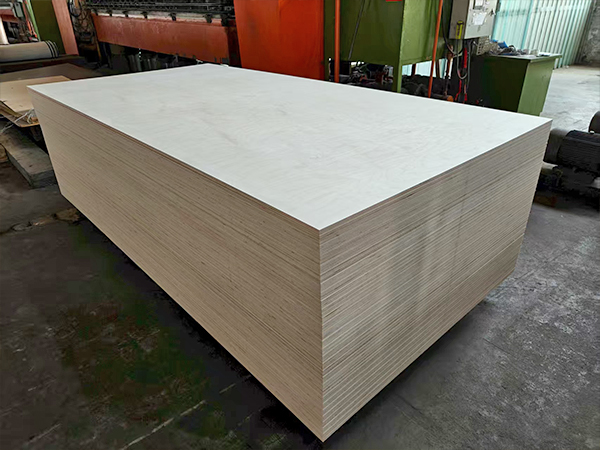
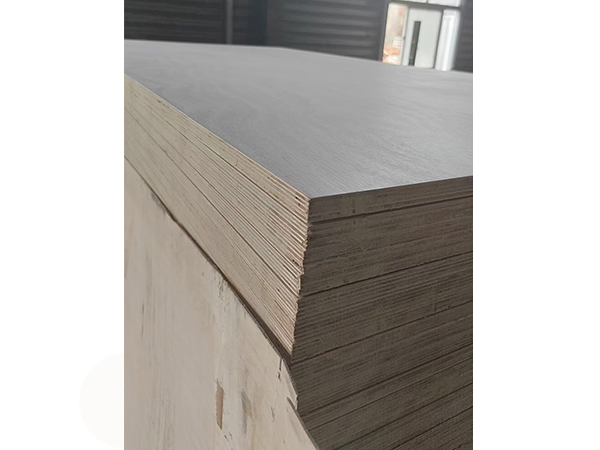
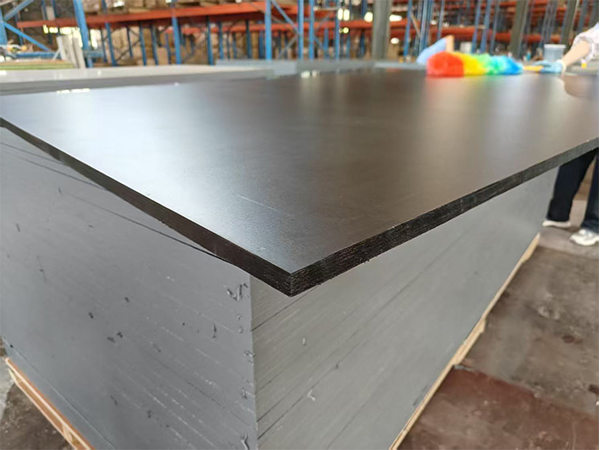
Plywood has become an ideal substrate choice for wooden flooring due to its excellent physical properties and cost-effectiveness. The specific advantages are as follows:
1.Excellent stability and strong resistance to deformation
Laminated structure offsets wood stress: Three or more layers of veneer are vertically staggered and glued together, effectively suppressing the wet expansion and shrinkage characteristics of wood. The deformation rate under temperature and humidity changes is more than 60% lower than that of solid wood, especially suitable for underfloor heating environments.
Outstanding bending resistance: bending strength ≥ 30MPa (pine plywood), not easily bent when load-bearing, does not crack when dragging heavy objects, and has been proven to be durable for more than 3 years in freight scenarios.
2.Cost effectiveness and adaptability advantages
Cost control: The surface layer is made of precious wood veneer (such as oak and walnut), and the base layer is made of fast-growing wood, with a price only 1/2-1/3 of solid wood flooring.
Processing convenience: It can be directly cut and locked for installation, compatible with suspended paving, and reduces construction difficulty.
3.Wide adaptability to the environment
Reliable moisture resistance: Phenolic resin adhesive forms a waterproof layer, and its applicability in damp areas such as kitchens and bathrooms has been verified.
Common in temperate/subtropical regions: Dry areas in the north are less prone to cracking, while the expansion rate during the rainy season in the south is less than 0.5% (measured data).
4.Balancing safety and aesthetics
Environmentally friendly and controllable: Choose E0 grade (formaldehyde ≤ 0.05mg/m ³) or F4 grade certified products, with harmful substance emissions meeting national standards.
Decorative flexibility: The surface can be pressed with imitation solid wood texture or fitted with natural wood veneer to achieve high-end visual effects such as walnut and teak.
Attention: Avoid purchasing boards that have not been fully dried (which are prone to later deformation), and prioritize products with a moisture content of 8% -12% and a quality inspection report.
 HOME
HOME TLE
TLE TOP
TOP